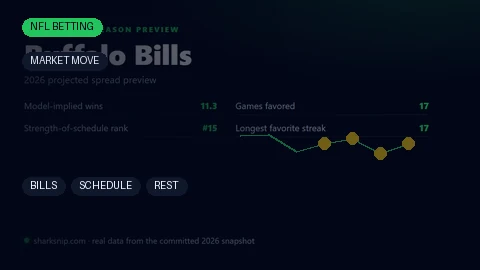


This was supposed to be a price check. The payload brought a flight map.
The PrizePicks beginner's guide can be refreshed only with current product terms: the entry type, leg count, payout multiplier, and any rule that changes what a win returns. None of those rows arrived. The batch contains NFL schedule notes instead. The guide may still be useful as a framework, but this evidence cannot certify a single live price.
No payout row means no payout verdict
There are two bad ways to handle missing product data. One is to assume the old chart is still current. The other is to assume it changed because time passed. Both are guesses. An empty result on the relevant field proves only that the field is empty.
That matters more for pick'em products than it does for a glossary. The economics sit in the multiplier and settlement rules. A small terms change can alter the break-even rate even when the screen looks familiar. Without the current terms, repeating an old number would turn a dated example into a live quote.
So the status is precise: the guide was not re-validated by this payload. That is different from saying the guide is wrong. Its explanations of flex entries, power entries, and correlated legs can still help a reader understand the product. Its historical payout examples should not be carried into a new entry without checking the app at the moment of submission.
The figures that did arrive belong to an NFL schedule story
The San Francisco 49ers are scheduled to travel 38,105 miles and cross 58 time zones . Miami is scheduled for 27,568 miles, sixth-most in the league, with every trip domestic . Those are sourced facts. They are also useless for confirming a PrizePicks payout table.
Keeping them in the article serves one purpose: it shows why row type matters. A ledger can be full of accurate numbers and still be empty for the question being asked. Volume is not relevance. A schedule feed cannot answer a product-pricing question any more than a box score can answer a withdrawal-policy question.
The temptation is to force a bridge — perhaps travel affects a player projection, which affects a pick, which makes the schedule relevant. That chain is too long for this payload. No player line arrived. No projection adjustment arrived. No payout multiplier arrived. The schedule rows stay schedule rows.
Use the guide as a method, not a cached checkout screen
The durable part of the beginner's guide is the sequence. Identify the entry structure. Read the live terms. Translate the offered payout into the hit rate the entry needs. Then decide whether the projections justify that hurdle. That method survives a product refresh because it starts from the current screen rather than memory.
The flex-versus-power guide explains why two entries with the same picks can carry different risk. The correlation guide explains why legs from the same game should not be treated as independent merely because the interface lists them separately. The vig and hold explainer supplies the broader pricing language. None of those pages should be mistaken for a current quote either.
The current product screen is the source of truth for the transaction. A static article can teach the calculation and the warning signs. It cannot promise that a multiplier, promotion, push rule, or eligible combination remains unchanged after publication.
What a real refresh would contain
A useful follow-up does not need a mountain of data. It needs one complete, timestamped product example with the entry type, number of selections, displayed multiplier, and settlement terms. From that row, the article can show the calculation and label the result as a point-in-time price.
A stronger refresh would collect several entry shapes from the same timestamp and explain where the break-even hurdle changes. That would support an apples-to-apples comparison. It would still need to say that product terms can move, because the point of the exercise is to teach a live check, not freeze a screen forever.
Until that row exists, the only honest edit is a warning against false freshness. Read the guide for structure. Read the current app for price. When the two disagree, the checkout screen wins.
The useful conclusion is narrower than the assignment
Nothing in this schedule-heavy payload confirms or refutes the guide's payout math. The figures it contains remain preserved and cited because they are real. They simply fail the relevance test.
That is the discipline worth carrying into any betting product. A number earns space only when it answers the question on the page. Here, three travel figures answer a different question. The PrizePicks guide remains a framework awaiting a current product row, not a live price sheet wearing a recent date.
The same audit should preserve the version of the terms the reader saw. Product screens change, and a later screenshot cannot prove what was offered earlier. A timestamped capture keeps the calculation reproducible and prevents a current multiplier from being backfilled into an old decision.
That record also separates a pricing error from a projection error. When an entry loses, the bettor should be able to see whether the live payout was misread, the player estimate was wrong, or correlation was ignored. Without the original terms, every explanation collapses into hindsight.
A credible update would publish the captured terms beside the formula and label the result with its timestamp. Readers could then repeat the math, compare a later screen, and see exactly what changed. That is the standard this empty payload cannot meet.
Until then, refusing a live number is not evasive. It is the only way to keep an educational page from becoming an accidental price quote.
The page becomes more useful by naming the missing evidence than by dressing an old example in a fresh publication date.
Breakeven win rate at recorded American prices
Breakeven probability is calculated only from American prices that were actually captured in the odds-history table.