ADP is the room's receipt. It records what everyone paid, then gets mistaken for proof that the purchase was wise. A projection is not truth either; it is an estimate with assumptions. The useful edge comes from comparing the two without pretending either one is sacred. This module declares stored player-week chart queries but no current ADP table or projection snapshot, so it cannot honestly publish live player prices, hit rates, or model ranks. Those belong on the live rankings board.
Why price drifts away from role
Draft rooms anchor to last season, familiar names, and memorable games. Those are understandable shortcuts. They are also how ordinary uncertainty gets marked up. The antidote is not contrarianism for its own sake. It is a role-first board that asks how a player can earn points before asking how loudly the room wants him.
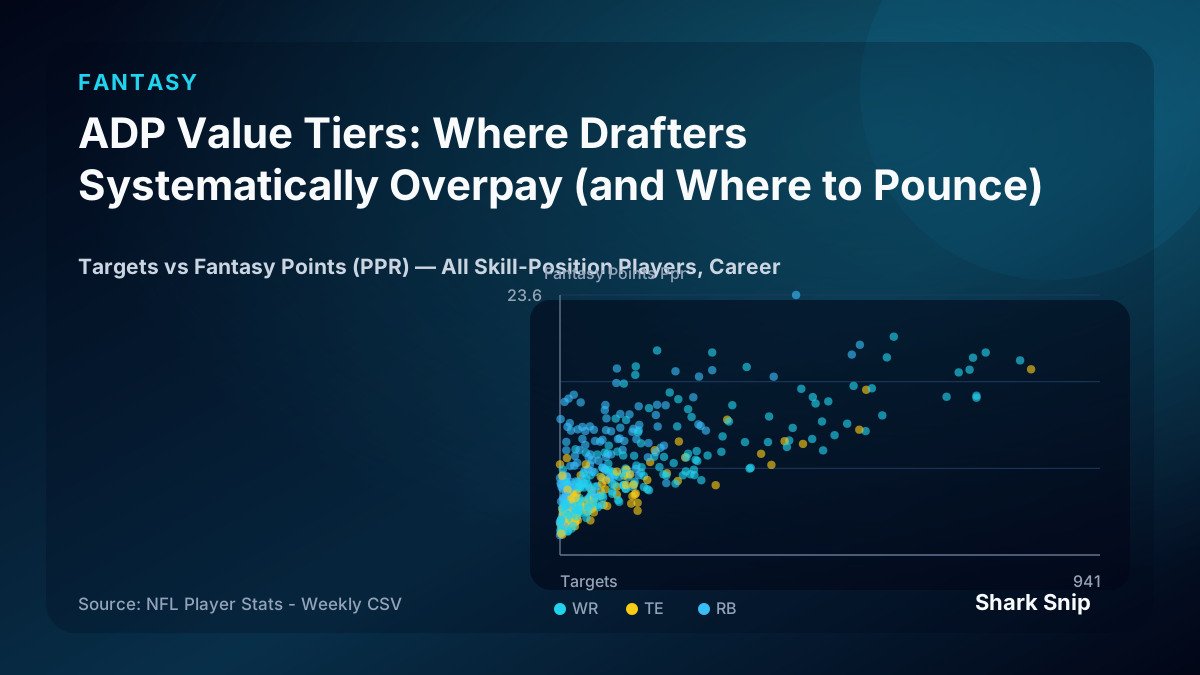
The configured scatter reads targets and PPR output from stored nfl_player_weekly rows. It shows that volume is connected to production while leaving plenty of room for context and variance. It does not contain current ADP. That limit matters: the chart can support a conversation about opportunity, but it cannot prove a present-day bargain.
The receiving-yard chart is a ceiling view from the same stored player-week dataset. It helps explain why peaks pull prices upward. A peak is worth studying; it is not a baseline merely because the replay package was excellent.
The premium zone: pay only for durable work
At the expensive end of a draft, the cost of being wrong is large because the room passes quickly. Premium picks should have several ways to remain useful: stable participation, a clear path to touches or targets, and a role that does not disappear when the game script changes. Talent matters. So does staying on the field when the offense is losing, protecting, or playing fast.
The mistake is not drafting stars. It is paying star prices for a role that still needs several assumptions. If a projection needs perfect health ahead of the player, a depth-chart promotion, and unusually efficient scoring, the market is charging for the ceiling before the job exists.
The crowded zone: reputation sends the invoice
The middle of a draft is where familiar veterans and attractive offensive logos become expensive. A player can be useful and still be the wrong purchase when several comparable roles remain available later. Compare the current workload case with the intact tier around him. If the only argument for the premium is last year's finish, the room may be buying the result instead of the inputs.
This is where the running-back regression framework earns its keep. Separate opportunity from efficiency. Carries, routes, targets, and snaps describe the job. Touchdowns and explosive plays can add value, but they should not be charged twice through both the projection and the ADP story.
The flexible zone: roster construction breaks ties
Once several players carry similar role projections, the team you are building matters more than a tiny rank difference. A roster with stable volume can absorb a volatile ceiling pick. A fragile roster may need the opposite. Position runs also matter, but they are information about the room, not permission to abandon your tiers.
Write the group before the draft starts. During the draft, cross off names and watch the break approach. That keeps a loud clock from turning a preference into a reach. The draft kit can supply the current ordering; your job is to decide which differences are real enough to matter.
The late zone: cheap uncertainty needs a path
Late picks should have a specific route to becoming startable. That can be a visible role growing, contingent work behind one player, or a format-specific skill the market has discounted. “Upside” is not a role. Name the event that changes the player's value and ask whether he is positioned to benefit.
Cheap does not mean free. Every late pick uses a roster spot and competes with waiver flexibility. Prefer cases you can update quickly. When the role fails to appear, move on. Loyalty is expensive in a part of the draft designed for churn.
How to build an honest ADP board
- Choose the league format. Scoring and starting requirements shape positional value.
- Project the role. Use current participation and opportunity evidence, not the remembered finish.
- Group comparable profiles. Tiers should express genuine uncertainty instead of fake precision.
- Attach the market timestamp. A stale price can create an imaginary edge.
- Record what would change the call. Injuries, roster moves, and role evidence should be able to move a player out of the tier.
Position notes without the fake certainty
Quarterbacks with rushing work, tight ends with real route participation, backs who can stay on the field in passing situations, and receivers who consistently earn targets all have more ways to pay a projection. That does not make every such player a value. It makes the role easier to defend. Price decides whether the profile is attractive.
Use the model-versus-consensus guide to inspect disagreements and the sleeper framework to test late prices. The clean bottom line is less exciting than a list of secret names: draft the supported role, compare it with the current cost, and refuse to pay twice for the same good story.
DFS outcome leverage versus recorded ownership
This chart remains empty until a verified source binds ownership projections to settled lineup outcomes for the same contests.
Prop hit rate versus recorded line distance
This chart remains empty until a verified source binds a player projection distribution, the offered prop line, and the settled result.