FAAB is not a personality test. Being aggressive is not automatically sharp, and saving the budget is not automatically disciplined. A good bid is simply the price at which the player improves your roster more than the future flexibility you give up.
There is no universal bid table
Fixed bid bands look useful because they turn a messy decision into a clean answer. They also ignore the variables that determine value: league depth, bench size, scoring, roster need, remaining budget, and the quality of the next-best free agent. A lead role in one league can be a season changer; the same player can be a luxury in another.
Use projection tiers as labels for role confidence, not as automatic prices. A quarterback streamer, a running-back handcuff, a receiver breakout candidate, and a speculative stash deserve different treatment. The final bid still belongs to your league.
Price the lineup change
Start with the player you would bench or cut. If the waiver claim does not improve a starting spot or protect a fragile one, its value is lower than the headline projection. Managers routinely overpay for a player who would become their fourth option at a position while ignoring a thinner part of the roster.
The trade-analyzer guide uses the same replacement logic. The relevant comparison is not “new player versus nobody.” It is new player versus the actual roster and waiver alternative.
Separate role evidence from outcome noise
A big box score can come from a stable role, or from one broken play. Bid on the role. For running backs, check snaps, routes, short-yardage work, and whether the coaching staff used the player across game scripts. For receivers and tight ends, check route participation, targets, and where those targets came from.
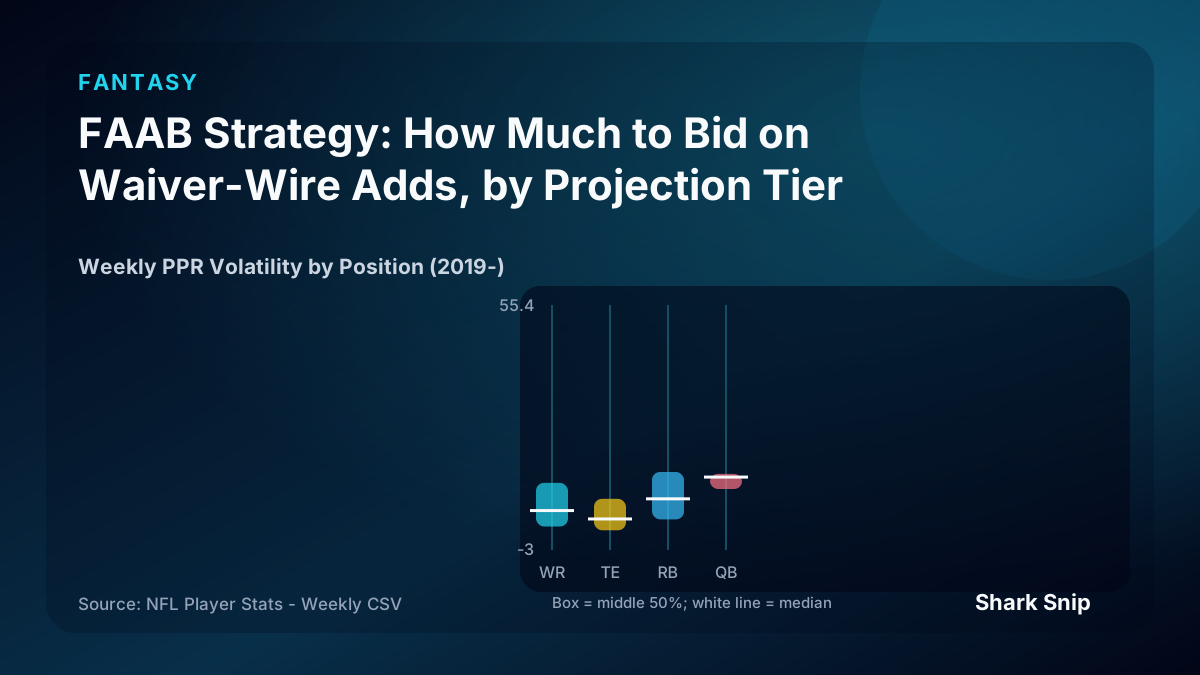
The chart above shows how wide weekly outcomes can be even among players who recorded receiving work. That volatility is a reason to inspect the inputs, not a reason to guess higher. The target share and air-yards guide explains how to distinguish durable usage from a noisy stat line.
Value the duration of the role
An immediate start and a season-long role are different assets. Injury replacements should be priced against the best available information about the starter’s status, but the bid should not assume the longest possible absence. A player whose route or snap share changed for tactical reasons may carry more durable value than a temporary injury fill-in.
Write down the expected duration and the evidence supporting it. When the evidence is weak, the price should leave room for being wrong. That is not timid bidding; it is refusing to pay for an outcome the data has not earned.
Budget is opportunity cost
Every successful claim removes options from future waiver periods. That cost rises when your roster is fragile and falls when the remaining schedule is short. It also depends on the market. If your league spends freely, a conservative bid may never win a useful player. If managers hoard budget, you may not need to chase their imagined price.
Do not bid merely to beat the room. Set the most you would pay for the lineup improvement, submit that number, and accept the loss when someone else values the player more. The goal is not to win waivers. It is to improve the team without buying every headline.
Adjust for league format
Shallow leagues keep stronger replacements available, which lowers the value of most claims. Deep leagues make playable roles scarce, which raises it. Tight-end premium, superflex, and dynasty rules can change which positions carry real replacement pressure. Import the actual settings before using a recommendation.
For weekly quarterbacks, the streaming guide shows why waiver depth is the first question. The same rule applies across positions: scarcity is observed in your league, not assumed from a generic ranking.
A bid card you can review
- Role: What changed, and is it confirmed?
- Duration: How long is the change likely to last?
- Lineup: Who leaves your starting roster or bench?
- Replacement: What is the best cheaper alternative?
- Flexibility: Which future claims become harder after this bid?
Keep that card with the result. You will learn more from whether the role read was right than from whether a rival happened to bid more. Over time, the useful pattern is not “I should always spend more.” It is which evidence reliably identified a role before the rest of the league priced it.
Bottom line
FAAB strategy is roster pricing under uncertainty. Use real role data, league-specific replacement level, and the cost of future flexibility. Projection tiers can organize the board, but they cannot supply a universal percentage. The best bid is the highest price that still makes sense for your team—and no higher.
DFS outcome leverage versus recorded ownership
This chart remains empty until a verified source binds ownership projections to settled lineup outcomes for the same contests.
Prop hit rate versus recorded line distance
This chart remains empty until a verified source binds a player projection distribution, the offered prop line, and the settled result.