
Updated Sep 7, 2026 · Week 1 board.
Building the ticket one leg at a time
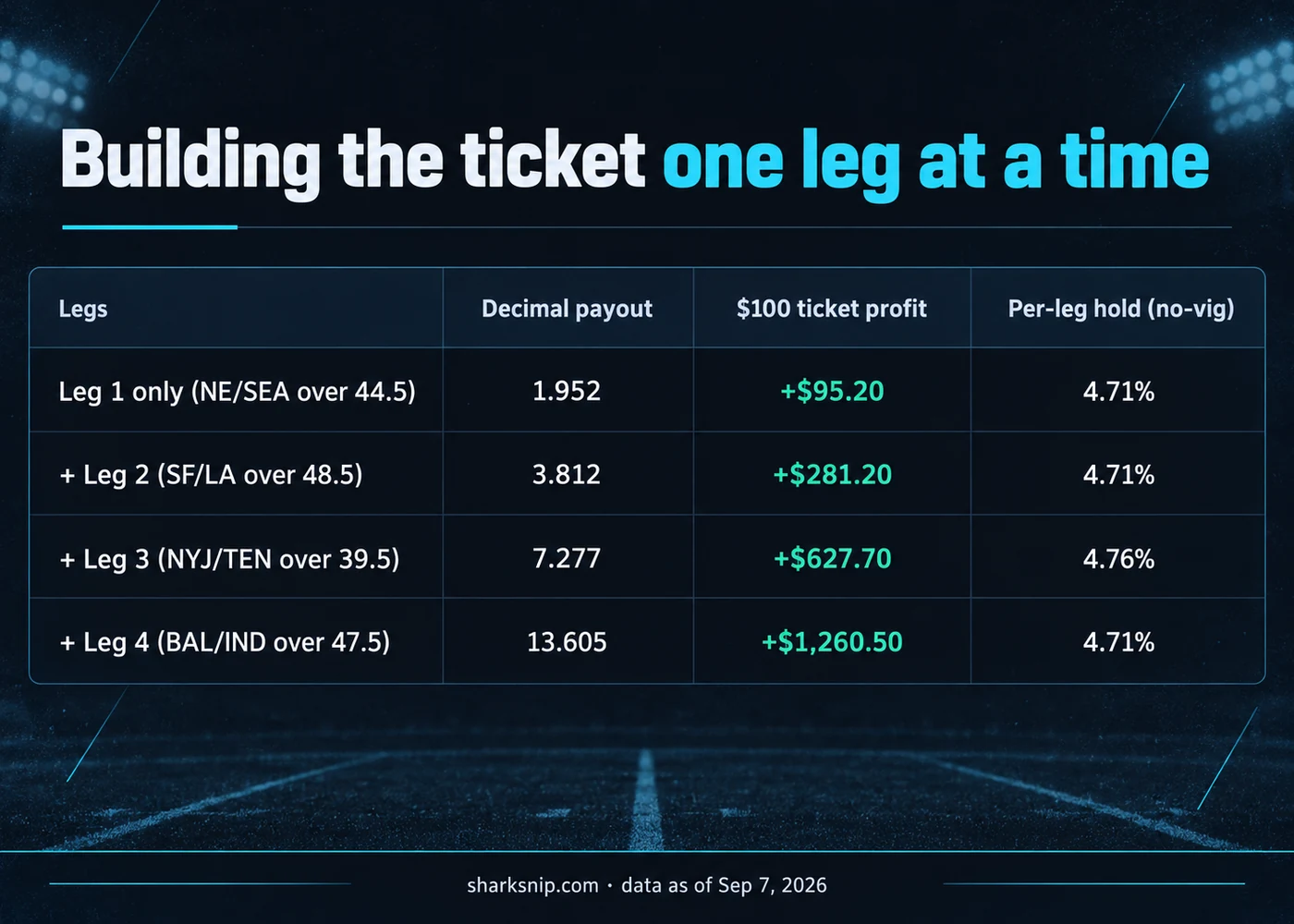
Four real Week 1 totals, all on the over, all at DraftKings. New England/Seattle over 44.5 at −105. San Francisco/Los Angeles over 48.5 at −105.
N.Y. Jets/Tennessee over 39.5 at −110. Baltimore/Indianapolis over 47.5 at −115.
Turn each American price into a decimal, which is 1 plus 100 divided by the price with the sign ignored, and you get 1.9524, 1.9524, 1.9091 and 1.8696. Multiply them together as the legs go on and the payout walks up from one game to four.
| Legs | Decimal payout | $100 ticket profit | Per-leg hold (no-vig) |
|---|---|---|---|
| Leg 1 only (NE/SEA over 44.5) | 1.952 | +$95.20 | 4.71% |
| + Leg 2 (SF/LA over 48.5) | 3.812 | +$281.20 | 4.71% |
| + Leg 3 (NYJ/TEN over 39.5) | 7.277 | +$627.70 | 4.76% |
| + Leg 4 (BAL/IND over 47.5) | 13.605 | +$1,260.50 | 4.71% |
Look at that last column and notice how little it moves. 4.71%, 4.71%, 4.76%, 4.71%. DraftKings prices these four totals with about the same vig, so each leg on its own takes about the same bite out of you. That flat number is the one a boost banner is quietly showing you.
The combined hold behaves nothing like that, and it does not stay flat.
What the combined hold does as legs stack
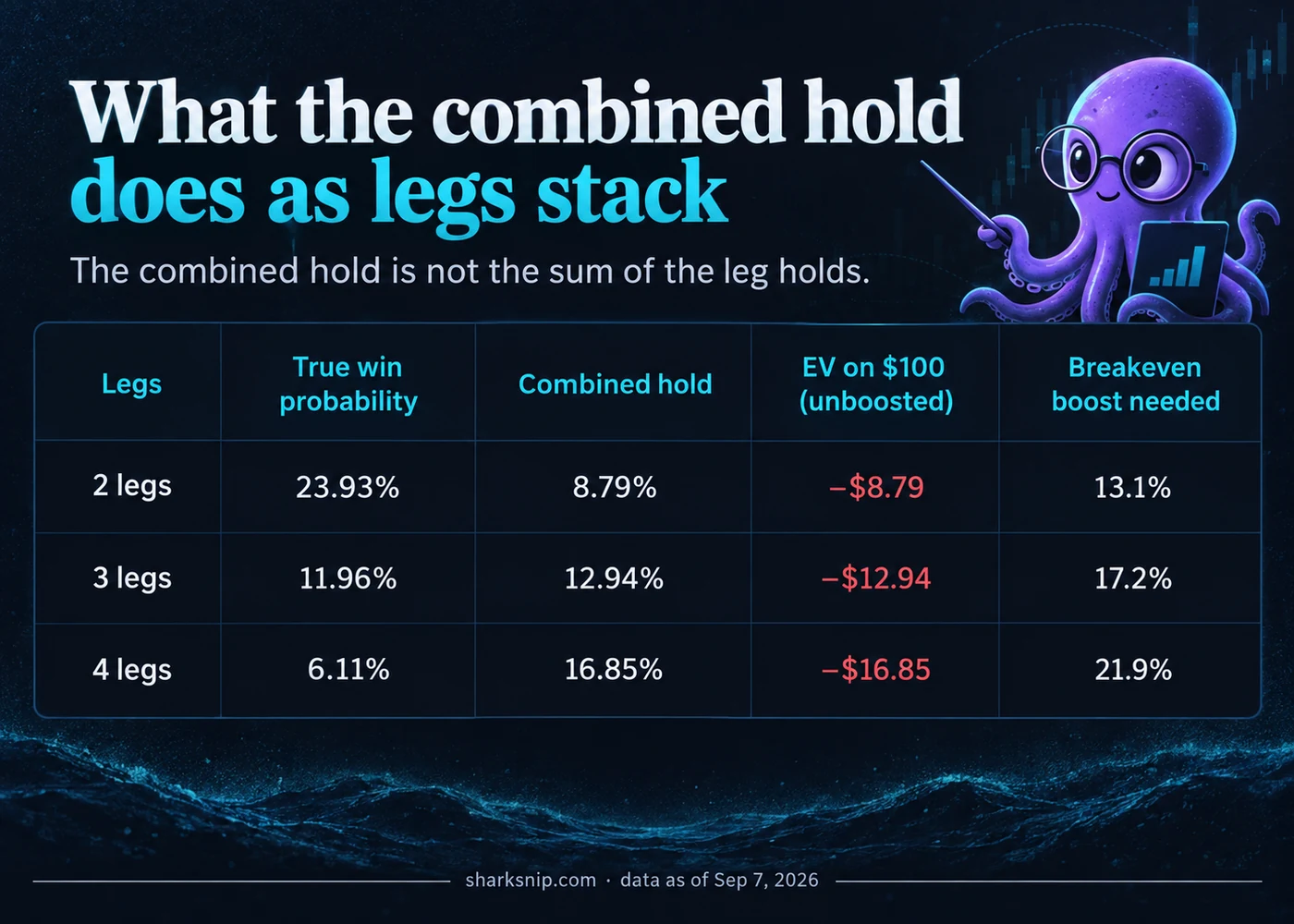
Combined hold doesn't add up. It multiplies. At each stage the true win chance is the product of that stage's no-vig fair chances, and the combined hold is 1 minus that chance times the decimal payout. Which sounds like homework until you watch what it does to a $100 ticket.
| Legs | True win probability | Combined hold | EV on $100 (unboosted) | Breakeven boost needed |
|---|---|---|---|---|
| 2 legs | 23.93% | 8.79% | −$8.79 | 13.1% |
| 3 legs | 11.96% | 12.94% | −$12.94 | 17.2% |
| 4 legs | 6.11% | 16.85% | −$16.85 | 21.9% |
Two legs cost you 8.79 cents on the dollar. Add a third and it does not tack on another 4.7 cents. It adds 4.15, and you're standing at 12.94%. The fourth leg adds 3.91 more and you're at 16.85%.
Every individual leg is still sitting there at 4.7 to 4.8%, looking perfectly innocent. The combined number keeps climbing because it gets multiplied through instead of added up. So a book handing a four-leg ticket the same flat boost it hands a two-leg ticket is giving the least help to the ticket that needed the most. Breakeven goes from 13.1% at two legs to 21.9% at four.
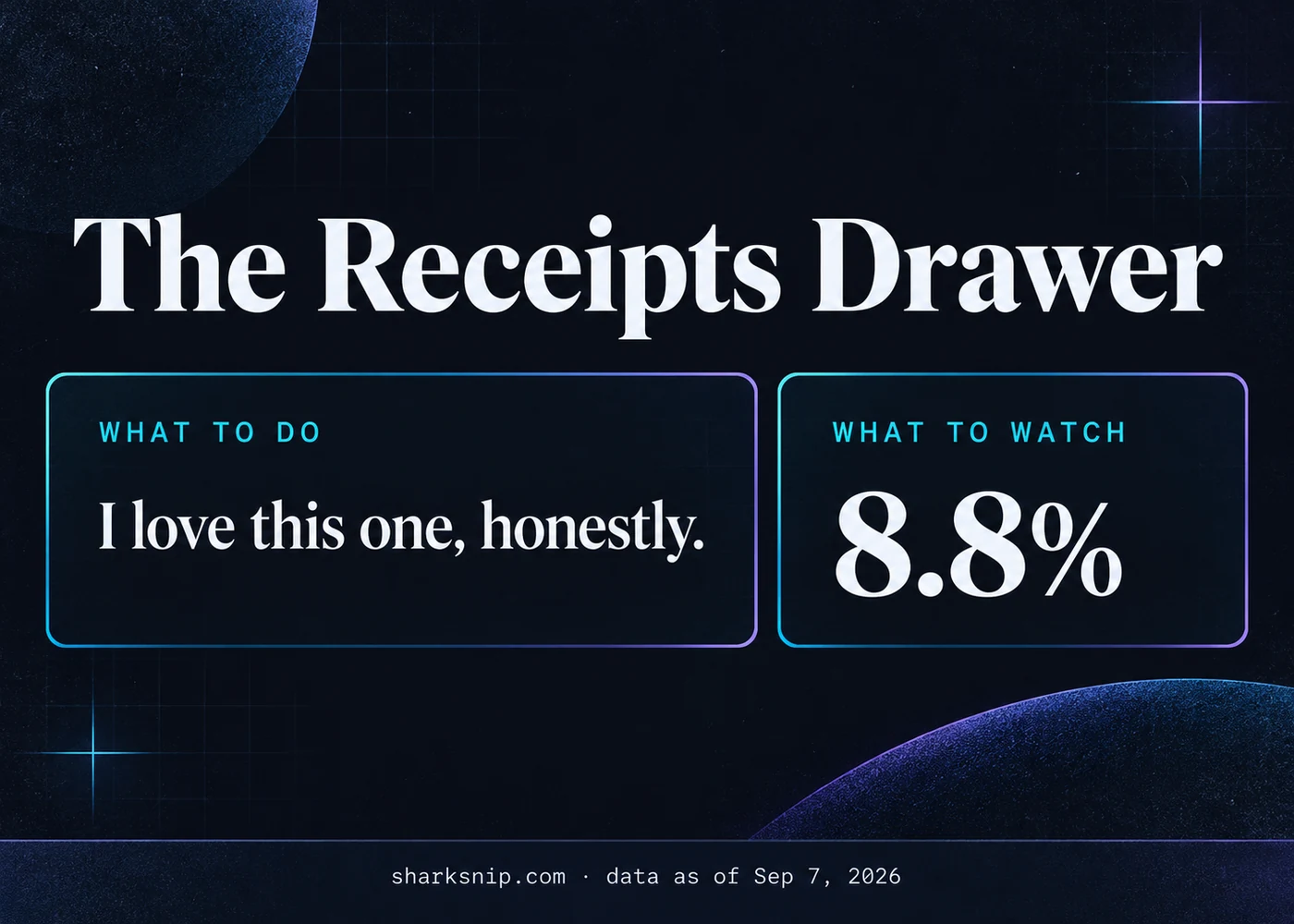
That's 8.8 points of boost you have to find for the privilege of two extra legs.
Where a flat boost percentage stops being enough
A flat 25% profit boost clears every stage on this slate. Two legs need 13.1%. Three need 17.2%. Four need 21.9%.
All of them sit under 25, so on this four-game build you're covered. You are not automatically covered anywhere else. Some promos cap at 20%, some only switch on above a certain leg count, and the boost percent on its own tells you nothing until you hold it against this specific ticket's breakeven. Check the boost once at the start of a build, then keep stacking legs, and you're reading a number that stopped applying two legs ago.
The independence assumption underneath all four legs
All of this assumes the four games don't touch each other. New England/Seattle's total has nothing to do with Baltimore/Indianapolis's. Four different games on four different clocks, so that assumption is fair. It stops being fair the second two legs come out of one game.
A first-half total and a full-game total on the same matchup move together, and multiplying them as though they didn't makes the parlay look cheaper than it is. None of these four share a game, so what you're watching compound here is vig and nothing else. Run your own ticket through the odds converter and the EV calculator before you trust a boost, and the live prices behind any leg are on the full Week 1 odds board. None of this says these four totals will hit.
It says what a fourth leg costs at these prices.
The Receipts Drawer
Two legs, 8.79% combined hold. Four legs, 16.85%, built out of per-leg holds that never once left the 4.71 to 4.76% band. That band held tighter than I expected. I am wrong here the second those legs stop being independent.
These four are four separate games, but pull two legs off one matchup and every probability above is being too kind to you. What to do tonight: read the breakeven column before you tap the boost, and if your ticket isn't this exact four-leg build, the number you need isn't 21.9%. Go work out your own.