Strength-of-schedule grids are useful right up to the moment they convince you every green square means the same thing. A defense can invite running-back volume and smother outside receivers in the same game. A soft opponent can also arrive on a short week, in bad weather, or after the player's role has changed. This module declares a schedule-strength chart query, but it does not attach a current player-level rest-of-season projection or a validated performance study. It will not turn colored boxes into guaranteed points.
Begin with the position, not the team logo
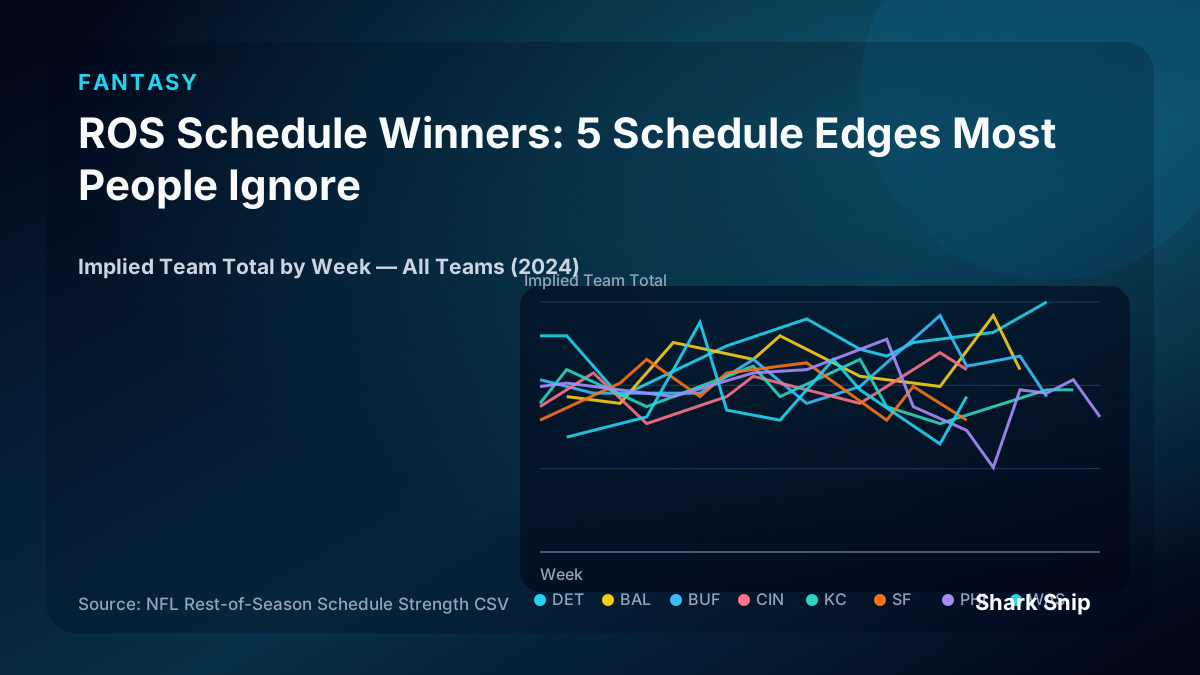
The first configured chart reads implied team totals by week from nfl_schedule_strength. That is useful game-environment context because it combines the market's view of scoring and matchup. It does not tell you which player receives the work or how a defense performs against a specific role. A team-level signal is the opening question, not the final answer.
Break the matchup down by how the player earns points. Running backs need rushing and receiving context. Receivers need coverage alignment, route role, and target competition. Tight ends need route participation and how the defense handles the middle of the field. A single opponent rank flattens all of that into a number that looks cleaner than the football.
Opponent pace changes the opportunity count
A matchup can be favorable because the defense is weak, because the game creates more plays, or both. Pace and neutral play selection help describe how many chances may exist. They still need the player's own role. A high-play environment does not rescue a receiver who is leaving the field or a back who has lost passing-down work.
Use team environment as a multiplier on a role you already trust. Do not use it to invent the role. The target-share guide is the right companion for receivers because schedule only matters after target access is established.
Rest, travel, and weather belong in the margin
Short rest, long travel, and difficult weather can change how an offense plays. This module declares no validated adjustment for those conditions, so it does not print one. Treat them as context that can widen uncertainty or break a close decision, not as a license to slash a projection by a remembered rule of thumb.
The same caution applies to prime-time narratives. A game being on a particular night does not create an edge by itself. The travel, rest, field, weather, and matchup details are the actual mechanisms. Name the mechanism or leave the slogan out.
Bye-week alignment is roster math
A player's bye changes the weeks in which you can start him. The impact depends on the rest of your roster, league format, and replacement options. A cluster of absences can create a real lineup problem even when each player looks fine in isolation. That makes bye alignment a roster-construction input, not a universal downgrade.
Map the whole team before using bye week as a tiebreaker. The bye-week streamer guide shows how to plan replacements without pretending the future waiver market is already known.
The playoff window matters only if the role survives
Late-season matchups can help when comparing otherwise similar players. They should not outrank current role, health, or near-term wins. A beautiful future schedule attached to a disappearing job is decorative. Weight the weeks that matter to your league, but keep the player's path to touches and targets in front of the calendar.
Schedule forecasts also decay. Defenses change through injuries, personnel shifts, and coaching adjustments. Rebuild the view as the season develops rather than carrying a preseason color grade into winter as though nothing happened.
Five schedule questions worth answering
- How does the opponent defend this position and role? Team-wide labels are not enough.
- What game environment does the market imply? Use the current total and spread with an as-of time.
- Will pace and play selection create opportunity? More plays help only when the player participates.
- Do rest, travel, or weather widen the range? Treat them as context unless a validated adjustment exists.
- Which weeks matter to this roster? Bye alignment and playoff timing are league-specific.
How to use a rest-of-season schedule grade
Start with the player's current role projection. Add position-specific opponent context and game environment. Then use roster timing, rest, travel, and weather as smaller adjustments that must be sourced and timestamped. Compare the result with similar players rather than treating the grade as an isolated command.
The live fantasy rankings are the place for current rest-of-season estimates. The start/sit board handles the weekly decision. A schedule edge is useful when it sharpens a close call. It becomes nonsense when it asks you to ignore the job the player actually has.
DFS outcome leverage versus recorded ownership
This chart remains empty until a verified source binds ownership projections to settled lineup outcomes for the same contests.
Prop hit rate versus recorded line distance
This chart remains empty until a verified source binds a player projection distribution, the offered prop line, and the settled result.