Skip to content
Back to guides
Fantasy football 9 min read

QB Rushing Value in 2026 Fantasy Football

Read the price, role, and market first

Why rushing quarterbacks such as Josh Allen, Lamar Jackson, Jayden Daniels, and Jalen Hurts change fantasy draft and DFS decisions.
13 sections
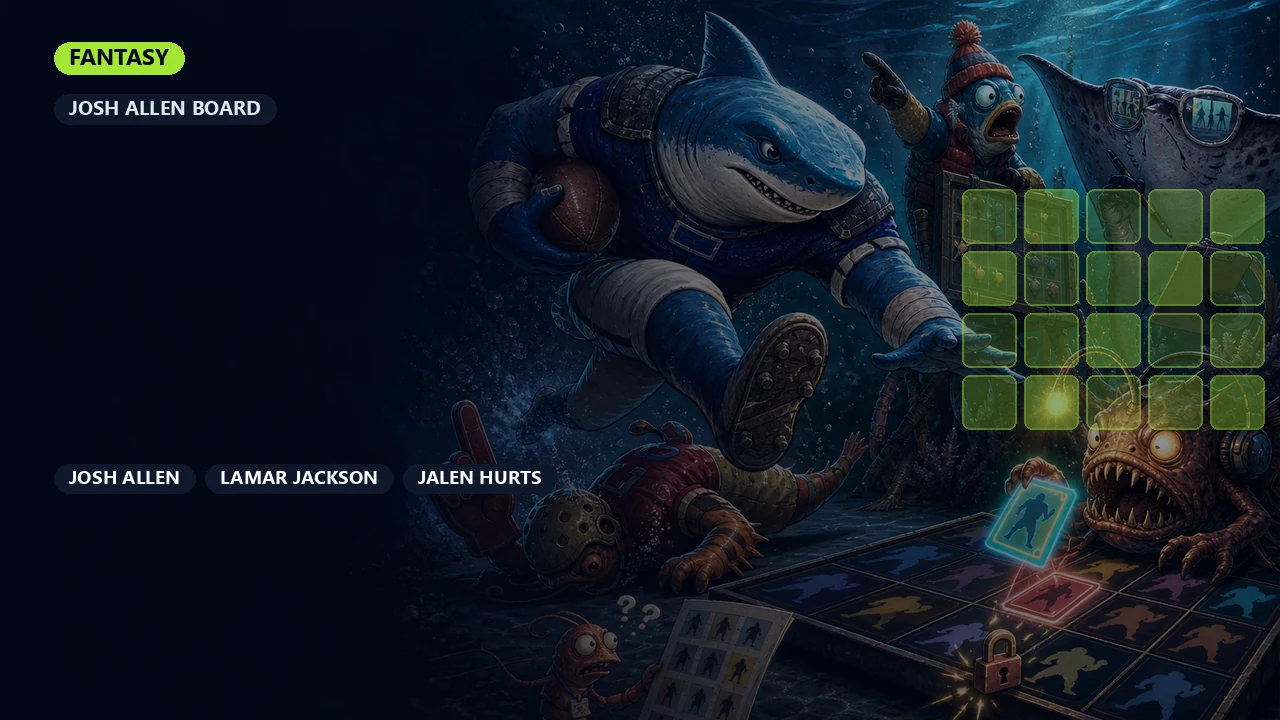
QB Rushing Value in 2026 Fantasy Football cover art

Quarterback rushing is the fantasy cheat code that never stays cheap for long. Josh Allen, Lamar Jackson, Jayden Daniels, and Jalen Hurts can create floor and ceiling without needing a perfect passing box score, which changes draft, trade, and DFS decisions.

Rushing raises the weekly floor

Passing volume can disappear when a team controls the game. Designed runs, scrambles, and goal-line carries keep rushing quarterbacks alive in scripts where pocket passers need efficiency to survive.

This is why the gap between a rushing QB and a pure passer can feel larger in head-to-head formats than season-long totals suggest. A few extra rushing points can turn a mediocre passing day into a usable week.

Passing stacks still matter

Rushing does not eliminate the value of stacking. Allen with Bills receivers, Hurts with Eagles weapons, Lamar with Ravens pass catchers, and Daniels with his top options can still create correlated ceiling in best ball and DFS.

The key is not overpaying for thin secondary pieces. If the quarterback's fantasy points can come through rushing, the pass catcher needs a real target share to be worth the stack. Review best ball stacking strategy before forcing every teammate.

Price pocket passers correctly

Patrick Mahomes, C.J. Stroud, and Caleb Williams can still be excellent fantasy picks if their draft cost reflects passing dependency and offensive environment. The issue is paying rushing-QB prices for a profile that needs 300 yards and multiple touchdowns.

In DFS, rushing quarterbacks can be cash-game anchors, while pocket passers often need stacked tournament environments. That difference also shapes cash vs GPP decisions.

How to use this before your next move

Turn QB Rushing Value in 2026 Fantasy Football into one clear decision before you open your projections: Why rushing quarterbacks such as Josh Allen, Lamar Jackson, Jayden Daniels, and Jalen Hurts change fantasy draft and DFS decisions. A real fantasy edge is something you would have acted on before the rest of your league caught on — not something that only looks smart once the box score is in.

First, Rushing raises the weekly floor. Passing volume can disappear when a team controls the game. Designed runs, scrambles, and goal-line carries keep rushing quarterbacks alive in scripts where pocket passers need efficiency to survive. If the read leans on hindsight, chasing last week's points, or a coach quote with no real role behind it, keep the player on the watch list instead of in your lineup.

Next, Passing stacks still matter. The useful version is something you can actually act on: projected touches, a target share, a scoring-format edge, a bye-week fill-in, or DFS salary leverage. If you cannot say exactly why this changes a start/sit or a draft pick, it is a story, not an edge.

Finally, Price pocket passers correctly. Name what would make you wrong before you commit — the depth-chart change, the injury, the matchup. Knowing your out keeps QB Rushing Value in 2026 Fantasy Football useful after the news breaks instead of leaving you defending a stale take.

Like this angle? Put it to work.
  • Rushing raises the weekly floor
  • Passing stacks still matter
  • Price pocket passers correctly

Reading about a fantasy edge is one thing; cashing it every week is another. On Shark Snip you can turn a read like this into a projection that updates itself — and check whether it actually beat the experts before you trust it with your lineup. Build it, test it against past seasons in the Workshop, and see whether it would have out-drafted and out-started the consensus. If it holds up, stack it against other managers on the leaderboard, follow the sharpest ones in the marketplace, or run your roster on the NFL auto-battler.

The honest test is whether the angle would have helped you win — more right start/sit calls, better draft-day value, smarter trades — across a full season, judged only on what you could have known at the time. Most takes don't survive that. The ones that do are worth building into your weekly routine, and worth tracking so you know it's a real edge and not one lucky Sunday.

Projection workflow

For QB Rushing Value in 2026 Fantasy Football, the first pass is not the over or the under. It is the projection path: expected snaps, routes, carries, targets, red-zone chances, game environment, and price. That is how Patrick Mahomes, Josh Allen, Lamar Jackson and Jalen Hurts become actual decisions instead of name-brand clicks on a prop board.

The same logic applies to Bills, Ravens, Eagles and Chiefs. A prop tied to a fast offense, stable role, and tight spread behaves differently from a prop tied to blowout risk or uncertain personnel. Treat best ball, hold, totals and DFS as connected markets, not isolated buttons.

Before-you-click checklist

  • Check role first: snap share, route participation, carries inside the 10, two-minute work, and injury replacements.
  • Check game script second: spread, total, team total, pace, weather, and whether the team is likely to chase or protect a lead.
  • Check price last: compare sportsbook lines, projection tools, DFS salary, and PrizePicks-style fixed lines when available.
  • Do not parlay legs that fight each other. A blowout script, pass-heavy comeback script, and under script cannot all be true at once.

Use fantasy ADP value tiers, target share vs air yards, FAAB strategy to keep the workflow grounded in prices and tools instead of hunches.

Concrete use cases

  • Patrick Mahomes reception or yardage props should start with routes and target share, not highlight clips.
  • Josh Allen rushing or touchdown props need designed-work and goal-line context before price shopping.
  • Lamar Jackson combo props need correlation checks because one stat can cannibalize another.
  • Bills and Ravens team environments can change the same player projection by several attempts or routes.

The edge is usually not a secret stat. It is the discipline to connect the stat to the role, the role to the script, and the script to the number currently being offered.

When to back off

Late injury news, weather, inactive lists, and depth-chart surprises can invalidate a prop quickly. That does not mean the original process was bad; it means the process needs a cancel rule. If the reason for the projection disappears, the bet should disappear too.

For DFS and SGP builds, also watch duplication and correlation. A lineup can project well and still be bad for a tournament if half the field has the same construction. A parlay can look exciting and still be overpriced if the sportsbook taxes the correlation more aggressively than the legs deserve.

Draft-room decision board

Use this matrix before turning the article into a pick, draft target, waiver bid, or lineup rule. The first column is the player or team name, the second is the role or market, the third is the price, and the fourth is the reason it could fail. That last column matters most. Patrick Mahomes, Josh Allen, Lamar Jackson and Jalen Hurts and Bills, Ravens, Eagles and Chiefs can all look obvious in a short blurb, but a real decision needs the fail state written down before the room gets noisy.

  • Role: what has to be true about snaps, routes, carries, usage, quarterback play, or coaching tendency for this idea to work?
  • Price: is the market asking you to pay for the median outcome, the ceiling outcome, or an outdated story?
  • Timing: should you act before schedule release, after camp reports, after inactive news, or only once the number moves?
  • Correlation: does this idea connect to best ball, hold, totals and DFS, and does that connection make the position stronger or more fragile?
  • Exit rule: what news would make you downgrade the player, pass on the bet, reduce exposure, or pivot to a different article path?

Player comps worth price-checking

A useful example board has three rows. Row one is the premium version: the name everyone wants and the price that may already be expensive. Row two is the uncomfortable value: the name with a real role but a reason the room is hesitant. Row three is the trap: the name that sounds right until you compare role, environment, and price side by side.

For this topic, start with Patrick Mahomes as the premium row, Josh Allen as the value row, and Lamar Jackson as the trap-or-fragile row. Then rerun the same exercise with Bills, Ravens, and Eagles. The names can change as news breaks, but the board structure keeps the analysis from collapsing into one player take.

The final column should be an action, not an opinion. Examples: draft at a one-round discount, bet only if the spread stays under a key number, add to a watch list but do not chase, use as a bring-back in tournaments, or wait for injury news. The more specific the action, the easier the article is to apply.

When to move the rank

This page should be treated as a living research note. Revisit it at predictable checkpoints: after schedule release, after the first depth-chart wave, after the first real preseason usage data, before draft weekend, and again once Week 1 lines or player props settle. Each checkpoint should answer the same question: did the information change the role, the price, or the timing?

Do not update only because a name is trending. Update because the input changed. A beat-report quote is weaker than first-team usage. A viral highlight is weaker than route participation. A market move is only useful if you know whether it came from injury news, public demand, sharp resistance, or simple book cleanup. That discipline is what separates a useful 2026 hub from a stale preseason take.

Verified stat anchors and 2026 price checks

Use names as evidence, not decoration. The useful SEO win is that Patrick Mahomes, Josh Allen, Lamar Jackson, Jalen Hurts and Jayden Daniels and Bills, Ravens, Eagles, Chiefs and Lions appear inside decisions, thresholds, and internal links instead of being dumped into a keyword list.

Calibrate the fantasy take with real 2025 production before moving to 2026 price. StatMuse season pages list Jonathan Taylor at 1,559 rushing yards, 18 rushing TDs, and 44 receptions; Bijan Robinson at 1,478 rushing yards with 79 catches for 820 receiving yards; Jahmyr Gibbs at 1,223 rushing yards, 77 catches, and 616 receiving yards; Puka Nacua at 166 targets, 129 catches, and 1,715 receiving yards; and Amon-Ra St. Brown at 172 targets, 117 catches, 1,401 yards, and 11 receiving TDs.

  • ADP rule: pay full freight only when role, team total, and contingency value all support the ceiling.
  • FAAB rule: 45-70% for a real lead-RB takeover, 25-45% for a target-share breakout, 10-25% for a stable flex, 1-8% for streamers, and 0-3% for bench stashes.
  • PPR tiebreaker: a Kyren Williams-style rushing profile and a Gibbs or Bijan receiving profile should not be priced the same if catches are worth a full point.
  • QB rushing rule: Josh Allen and Jalen Hurts archetypes deserve separate math from pocket passers because goal-line rushing can change weekly ceiling and late-round replacement value.

Turn those names into decisions: draft, fade, trade, stash, or bid only when the 2026 price leaves room after role risk. Related workflows: fantasy ADP value tiers, target share vs air yards, FAAB strategy.

Research note board

Use this draft-room board before moving a player up or down. It keeps projection, price, and format separate.

DecisionCheck firstExample applicationDo not act if
DraftADP, scoring format, role certaintyPatrick Mahomes at sticker price versus Josh Allen at a discountThe room is charging for ceiling while role risk is still unresolved
TradeRest-of-season role, playoff schedule, roster needLamar Jackson as a need-based target instead of a generic upgradeBoth sides depend on the same fragile team environment
Waiver or stashInjury-away upside, first-team reps, FAAB reserveJalen Hurts profile compared with a short-term streamerThe move costs flexibility without adding a clear starting path

This fantasy and DFS content is informational only, not betting, financial, or lineup advice. Always confirm news, rules, salaries, injuries, weather, and contest settings before making decisions.

Educational analysis only, not a bet recommendation. Check current lines, injuries, rules, contest terms, and local regulations before acting.

DFS projected ROI vs ownership %

Projected GPP ROI multiplier vs projected ownership across simulated lineups. Sub-10% leverage plays compound when they hit; chalk plays cap your upside even when the projection is dead-on.

Prop OVER hit rate vs line distance from median

Empirical hit rate of OVER bets as the prop line moves away from the player projection median, measured in standard deviations. A line set 1sd below the median hits ~84% of the time — but books price the juice to match.

Frequently asked questions

What is the central point of "QB Rushing Value in 2026 Fantasy Football"?
Quarterback rushing is the fantasy cheat code that never stays cheap for long. Josh Allen, Lamar Jackson, Jayden Daniels, and Jalen Hurts can create floor and ceiling without needing a perfect passing box score, which changes draft, trade, and DFS decisions. The page is built so a fantasy manager can take each section into a real model rather than just consume an opinion — every claim ties back to a feature, role-window, or validation step a builder can reproduce.
What does the "Rushing raises the weekly floor" section actually argue?
Passing volume can disappear when a team controls the game. Designed runs, scrambles, and goal-line carries keep rushing quarterbacks alive in scripts where pocket passers need efficiency to survive. The disciplined version is to treat it as one input into a projection rather than a binary verdict — then audit closing market context (or in fantasy, late-week role news) to catch process leaks early.
How does "Passing stacks still matter" change the way you act on this?
Rushing does not eliminate the value of stacking. Allen with Bills receivers, Hurts with Eagles weapons, Lamar with Ravens pass catchers, and Daniels with his top options can still create correlated ceiling in best ball and DFS. League settings, scoring, and timing window all change the answer; the article points at the structural axis rather than the player-of-the-week.
What is the trap in "Price pocket passers correctly" that most managers miss?
In DFS, rushing quarterbacks can be cash-game anchors, while pocket passers often need stacked tournament environments. That difference also shapes cash vs GPP decisions. The real failure mode is locking in a stale thesis just because a name is familiar; refresh the watch list when depth charts, role news, and price move.

Build a free model in 60 seconds →

Go →
9m read time
30 players/teams
12 key angles
Angles in this read 6 angles
Target heat fantasy
Tier stack fantasy
Snap meter fantasy
Ownership leverage dfs
Correlation web correlation
Edge meter edge

FantasyPros 2025 PPR anchor plus 2026 role context

Fantasy examples should stay tied to role, usage, format, and price instead of generic labels. For RBs, separate workload security from last season finishes before moving a player up the board.
Jonathan TaylorKyren WilliamsChristian McCaffreyBijan RobinsonJahmyr GibbsJames Cook IIIDerrick HenryDe'Von AchaneColtsRams49ersFalconsLionsBillsclosing line valuetarget shareair yardsred-zone roleroute participation
QB Rushing Value in 2026 Fantasy Football data infographic
Chart view of the article's core numbers. Source: inline-lib-dfsOwnershipVsLeverage-fantasy-qb-rushing-value-2026.

Start free — pick a sport

Go →

We use cookies for essential site functionality. With your consent, we also use cookies for analytics and performance monitoring. See our Privacy Policy.