Consensus is useful because it tells you what the room believes. A model is useful because it can disagree without worrying about being invited back to the podcast. Neither deserves blind trust. This module does not declare a consensus snapshot, model release, or player-level comparison table, so it will not publish current rank gaps or victory laps. The live rankings board is where dated comparisons belong.
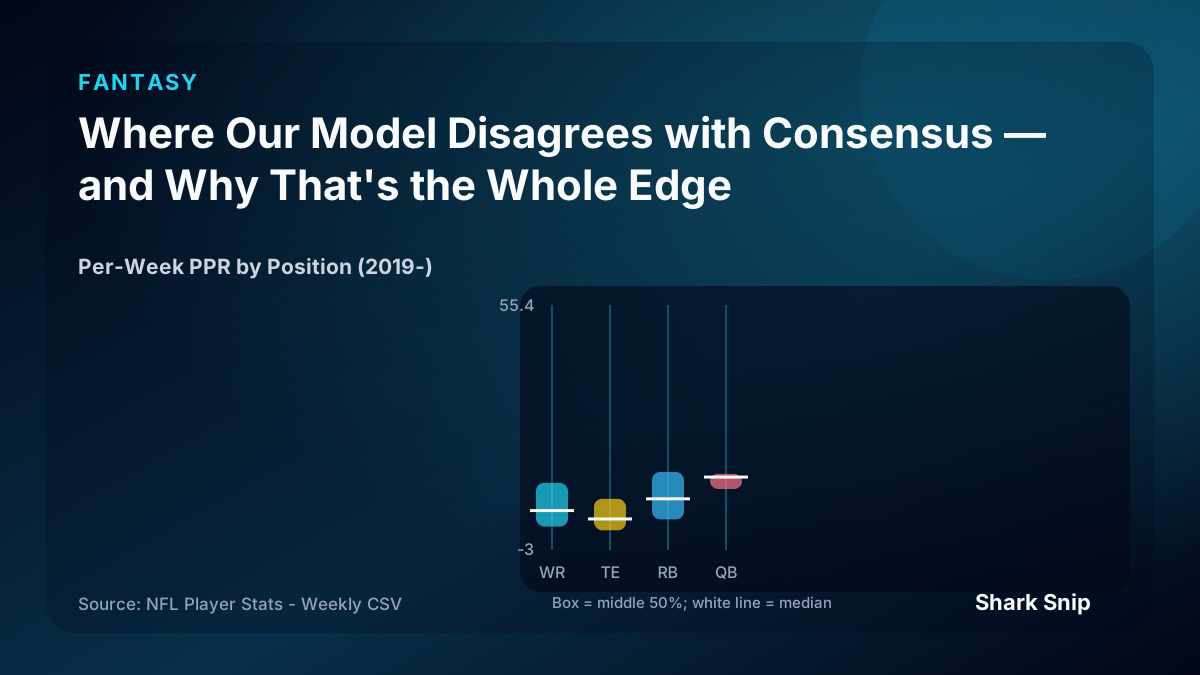
The chart shows position distributions, not model edge
The configured chart reads PPR output by position from stored nfl_player_weekly rows. It can show how weekly outcomes differ across positions. It cannot prove the model beats consensus, identify a current disagreement, or explain why one exists. Those claims require paired model and market rows with an as-of time.
That boundary is useful. A pretty distribution can provide context without becoming evidence for a separate claim. When a model and consensus split, the receipt must be the actual projection, the actual market rank, and the inputs available at that moment.
Why consensus tends to move slowly
Human rankings anchor to familiar names and prior lists. Once a player has a stable summer reputation, small pieces of role evidence may not move the crowd immediately. That lag can create a price difference. It can also protect the market from overreacting to one noisy report. Slow is not automatically wrong.
The model has the opposite failure mode. It can move quickly because one feature changed, even when that feature is thin, mismeasured, or temporary. Speed is not automatically insight. The right question is whether the disagreement is supported by independent role evidence.
Open the gap and inspect the machinery
A rank difference is a flag, not a pick. Start with the features doing the work. Routes, targets, carries, snaps, and a confirmed role are easier to defend than a projection driven by one efficiency outlier. Then check whether the model and consensus are using the same injury, roster, and scoring information. A stale comparison can manufacture drama from two boards that were never looking at the same world.
Ask what would close the gap. If a player needs more starter reps, a cleaner health report, or a changed depth chart, name it. A disagreement with no falsifier is just a preference dressed in model language.
Four kinds of disagreement
- Role disagreement. The model and market expect different playing time or opportunity.
- Price disagreement. The projection is ordinary, but the room is charging an unusual premium or discount.
- Format disagreement. The boards value receptions, rushing, or positional scarcity differently.
- Freshness disagreement. One side has newer information than the other.
Those categories lead to different actions. A role disagreement calls for evidence. A price disagreement calls for patience. A format disagreement calls for the correct settings. A freshness disagreement calls for a timestamp before anyone argues about football.
When the model deserves less weight
Be cautious when the NFL sample is thin, the player is returning from injury, the depth chart is unsettled, or one volatile input dominates the result. Those are not reasons to discard the model. They are reasons to widen the range and avoid the fake confidence of a precise rank.
Also be cautious when the model agrees with consensus. Agreement does not make a player safe; it simply means there may be little price edge. A fair projection at a fair price can be a perfectly sensible pick. It is not a secret.
Turn disagreement into a draft process
- Capture both boards at the same time. Different timestamps produce fake gaps.
- Normalize league settings. Compare like with like.
- Inspect the role inputs. Find the evidence behind the model move.
- Compare within the tier. Price matters relative to available alternatives.
- Record the falsifier. Know what new information would change the call.
The ADP value-tier framework helps translate a disagreement into price, and the rankings update guide shows how to read movement without freezing stale numbers. Use the draft kit for the current room. The edge is not “model good, people bad.” It is knowing exactly why the two sides split and refusing to bet the gap until the evidence survives inspection.
Expected value from graded outcomes
Expected-value cells render only when a verified source binds observed win outcomes to the price paid for the same bets.
DFS outcome leverage versus recorded ownership
This chart remains empty until a verified source binds ownership projections to settled lineup outcomes for the same contests.