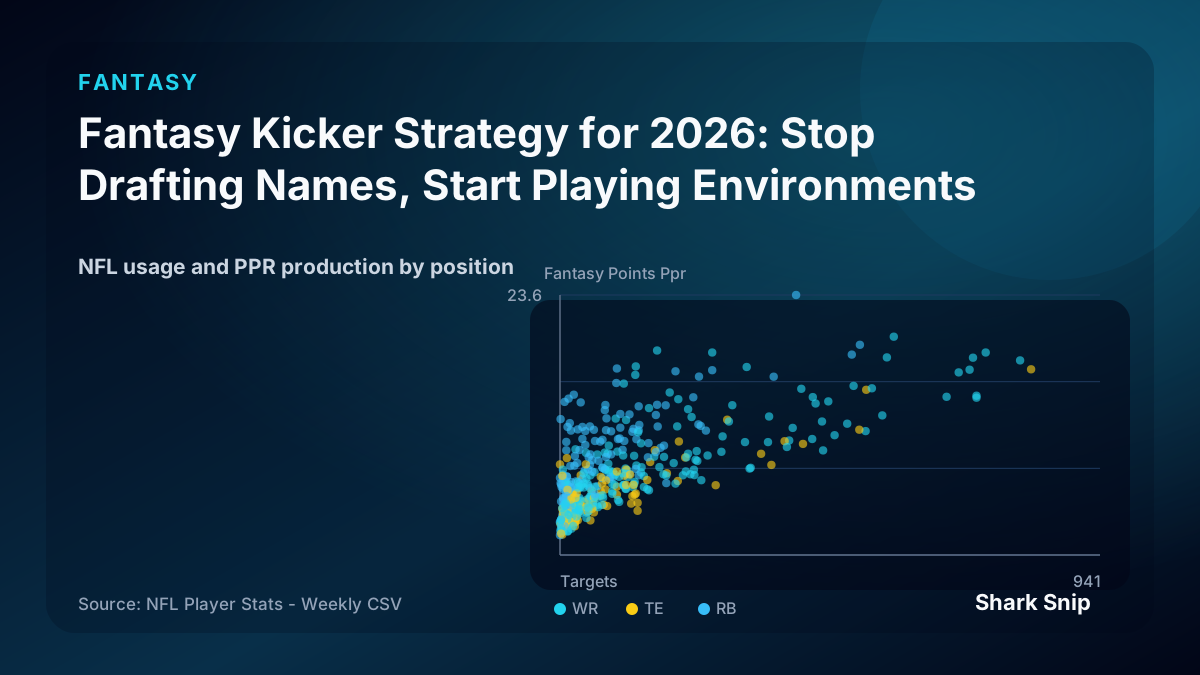
Kicker strategy is simple until managers make it personal. Brandon Aubrey, Cameron Dicker, Chris Boswell, Harrison Butker, and Ka'imi Fairbairn are recognizable names, but fantasy kicker scoring is driven by environment, team scoring chances, and weather more than reputation.
Draft Kicker Last, Stream Off The Total
The single biggest mistake in fantasy is treating kicker like a position you draft for. It isn't. The gap between the best and worst available kicker on any given week is tiny and almost completely unpredictable from year to year, which means burning a mid-round pick on the "good" kicker is just paying full price for noise. The roster spot is worth more than the marginal points. Wait until your last pick, grab whoever, and accept that you will be churning this slot all season. If you skipped a useful bench flyer to lock in a kicker early, you already lost the trade.
Streaming is the entire game here, and the lever you pull is the Vegas team total, not the kicker's name. A team projected to score a lot is a team that drives into scoring range often, and drives that stall short of the end zone are where field goals come from. You want offenses that move the ball but live in that messy 25-to-40-yard zone, paired with a defense unlikely to blow them out of game script. Read the implied total off the spread and over/under, prioritize the higher-scoring side, and re-shop the position weekly instead of marrying a guy.
Domes, Weather, And Pressure-Testing The Pick
Environment swings kicker outcomes more than talent does, so weight it heavily. A dome or a warm clean-air game removes the two things that wreck a leg: wind and a slick, frozen surface. Late season, a kicker indoors against a kicker in a 20-mph crosswind off a lake is not a close call, and books quietly bake some of this into totals already. Check the forecast the morning of, not Tuesday, because wind direction and gusts at field level are what matter, not the temperature headline. Rain hurts less than wind. A cold, still night is fine. A mild, gusty one is a trap.
Pressure-test before you commit. The failure case for a kicker is a great offense that's too great: a team that scores so efficiently it walks the ball into the end zone instead of settling for threes, capping your attempts. So pair a strong-but-not-elite scoring offense with a defense that bends, and confirm the opponent isn't likely to force a one-sided game where your guy sits late. If the only argument for a kicker is "good team," you haven't done the work. The real read is volume of stalled red-zone trips plus a clean kicking environment, and that combination is what you're actually streaming for.
Chase team totals, not brand names
A kicker attached to Patrick Mahomes, Jalen Hurts, Josh Allen, Dak Prescott, or Joe Burrow can be valuable because the offense creates scoring chances. But the bet is not on the kicker logo. It is on red-zone trips, field-goal attempts, and extra points.
When two kickers project similarly, take the one in the better offense or indoor environment. A dome kicker on a high-total game can be a better weekly play than a famous kicker in heavy wind.
Coaching tendencies matter at the margins
Some coaches are more willing to kick from distance, while others go for fourth downs aggressively. That difference can move fantasy value even without a talent gap. A conservative offense that stalls near the 30 can create useful kicker weeks if the leg is trusted.
The sweet spot is a good offense that reaches scoring range often but does not convert every red-zone drive into touchdowns. That profile creates field-goal volume without relying on broken offense.
Draft late and stream early
There is rarely a reason to spend a meaningful draft pick on a kicker. Use the final rounds, prioritize Week 1 environment, then stream based on totals, weather, and injuries. The position is replaceable enough that early attachment is usually a leak.
If your league still uses kickers, treat the spot like a weekly prop market. You are betting on opportunity, not proving which kicker is best in a vacuum.
Practical checklist for Fantasy Kicker Strategy for 2026
Start by writing the decision in plain English: Fantasy football kicker strategy for 2026 drafts and waivers: domes, team totals, weather, coaching tendencies, and why name value is overrated. That keeps the page tied to a concrete lineup or draft decision, not a generic 2026 NFL take. Tag the note with fantasy-football, nfl, 2026-fantasy, kickers so you can find the same angle again when the board, depth chart, or injury report changes.
Checkpoint one is "Draft Kicker Last, Stream Off The Total." Do not move past it until the data you are using would have been available before the decision. The supporting evidence should connect to this claim: The single biggest mistake in fantasy is treating kicker like a position you draft for. It isn't. The gap between the best and worst available kicker on any given week is tiny and almost completely unpredictable from year to year, which means burning a mid-round pick on the "good" kicker is just paying full price for noise. The roster spot is worth more than the marginal points. Wait until your last pick, grab whoever, and accept that you will be churning this slot all season. If you skipped a useful bench flyer to lock in a kicker early, you already lost the trade.
Checkpoint two is "Domes, Weather, And Pressure-Testing The Pick." Convert that section into one measurable field, whether it is a bye-week gap, route-share trend, waiver bid range, projected fantasy points, or market entry price. If the field cannot be written down, the angle is still a story instead of a model input.
Checkpoint three is "Chase team totals, not brand names." Record the opposing case before acting. A useful note says what would make the thesis wrong, what late-week role news or ADP movement would confirm that the room already adjusted, and how small the first roster exposure should be.
- Draft Kicker Last, Stream Off The Total
- Domes, Weather, And Pressure-Testing The Pick
- Chase team totals, not brand names
- Coaching tendencies matter at the margins
- Draft late and stream early
Turn this into a model: open the Workshop, start a blueprint, see top creators, climb the leaderboard, or scout a squad on the NFL auto-battler.
Turning an angle like this into a model is concrete. Start with the thing that actually drives the edge — a usage trend, a schedule spot, a situational tendency, or a piece of news — and make sure you are only feeding it information you would have had before kickoff. Yesterday's box score and the closing line are not allowed to sneak in; a stat you only know after the game makes a model look brilliant in testing and lose money for real. Then tell it what to predict: who covers the spread, whether a player prop goes over, a yes/no on a market like anytime touchdown, or a season-long fantasy projection. Every piece of the model stays labeled in plain English, so anyone following your picks can see exactly why it bet what it bet.
How you test it matters more than how good the backtest looks. Run it on past seasons in order — train on what came before, grade it on the next week it has never seen — instead of letting it peek at the future. Then ask the only question that pays: does it beat the closing line? A model that cannot beat "just take the number the market closed at" is not worth the work. Check that when it says 60% it actually hits near 60%; if it runs hot or cold, fix that before you trust the confidence. And only bet the spots where the edge still survives after the juice, after sensible bet sizing, and after an honest look at last week's losing tickets — because a few good or bad weeks can hide both a winning approach and a losing one.
To make this concrete, open the Workshop with the same topic and rebuild the workflow above. A typical build for an article like this is one input feed (play-by-play, schedule context, or player usage), the angle-specific edge, the market you are betting, a test that walks through past seasons honestly, and bet sizing that keeps you disciplined. Everyone can see how it was built, and it climbs the leaderboard when it keeps beating the closing line over a real sample.
Related reading and tools
Keep building the board with fantasy ADP value tiers, FAAB strategy guide, target share vs air yards.
Verified stat anchors and 2026 price checks
Use names as evidence, not decoration. The useful SEO win is that Patrick Mahomes, Josh Allen, Jalen Hurts, Joe Burrow and Ja'Marr Chase and Chiefs, Bills, Eagles and Lions appear inside decisions, thresholds, and internal links instead of being dumped into a keyword list.
Calibrate the fantasy take with real 2025 production before moving to 2026 price. StatMuse season pages list Jonathan Taylor at 1,559 rushing yards, 18 rushing TDs, and 44 receptions; Bijan Robinson at 1,478 rushing yards with 79 catches for 820 receiving yards; Jahmyr Gibbs at 1,223 rushing yards, 77 catches, and 616 receiving yards; Puka Nacua at 166 targets, 129 catches, and 1,715 receiving yards; and Amon-Ra St. Brown at 172 targets, 117 catches, 1,401 yards, and 11 receiving TDs. Cross-check that read against the FantasyPros 2025 PPR consensus finish before moving a player up or down the 2026 board.
- ADP rule: pay full freight only when role, team total, and contingency value all support the ceiling.
- FAAB rule: 45-70% for a real lead-RB takeover, 25-45% for a target-share breakout, 10-25% for a stable flex, 1-8% for streamers, and 0-3% for bench stashes.
- PPR tiebreaker: a Kyren Williams-style rushing profile and a Gibbs or Bijan receiving profile should not be priced the same if catches are worth a full point.
- QB rushing rule: Josh Allen and Jalen Hurts archetypes deserve separate math from pocket passers because goal-line rushing can change weekly ceiling and late-round replacement value.
Turn those names into decisions: draft, fade, trade, stash, or bid only when the 2026 price leaves room after role risk. Related workflows: fantasy ADP value tiers, target share vs air yards, FAAB strategy.
Research note board
Use this draft-room board before moving a player up or down. It keeps projection, price, and format separate.
| Decision | Check first | Example application | Do not act if |
|---|---|---|---|
| Draft | ADP, scoring format, role certainty | Patrick Mahomes at sticker price versus Josh Allen at a discount | The room is charging for ceiling while role risk is still unresolved |
| Trade | Rest-of-season role, playoff schedule, roster need | Jalen Hurts as a need-based target instead of a generic upgrade | Both sides depend on the same fragile team environment |
| Waiver or stash | Injury-away upside, first-team reps, FAAB reserve | Joe Burrow profile compared with a short-term streamer | The move costs flexibility without adding a clear starting path |
Use the examples as planning context, not as a bet recommendation. Lines, roles, injuries, and depth charts can move quickly.
Educational analysis only, not a bet recommendation. Check current lines, injuries, rules, contest terms, and local regulations before acting.
DFS projected ROI vs ownership %
Projected GPP ROI multiplier vs projected ownership across simulated lineups. Sub-10% leverage plays compound when they hit; chalk plays cap your upside even when the projection is dead-on.
Prop OVER hit rate vs line distance from median
Empirical hit rate of OVER bets as the prop line moves away from the player projection median, measured in standard deviations. A line set 1sd below the median hits ~84% of the time — but books price the juice to match.